Loading...
Cold spots in your home? High heating bills every January? Blown-in insulation fills gaps that standard batts miss and brings your attic up to the R-value Twin Falls winters demand.
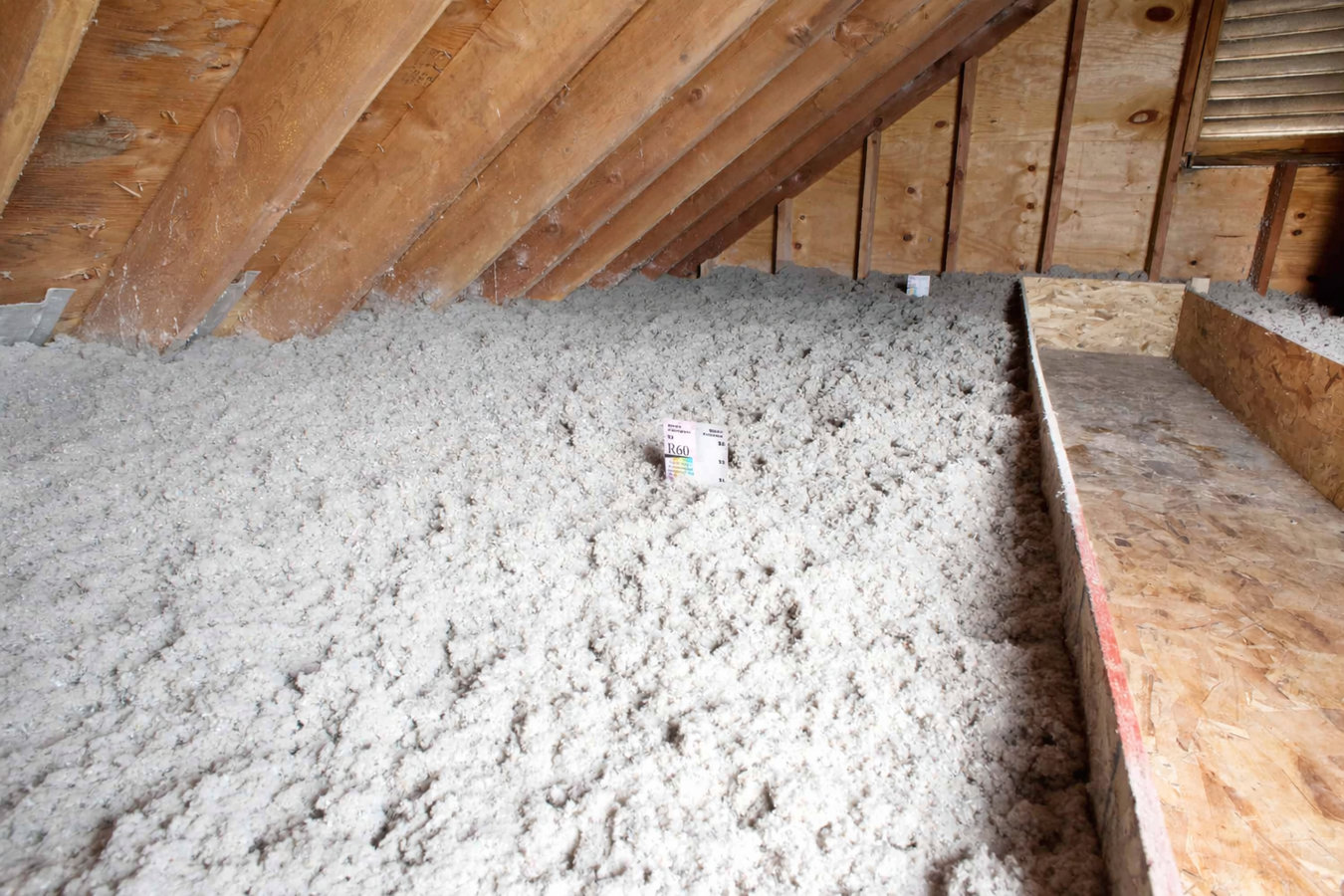
Blown-in insulation in Twin Falls fills every corner and irregular gap with loose material - fiberglass or cellulose - blown in through a hose. Most attic jobs in a standard home are finished in a single day. It reaches recommended R-values for Idaho winters and works especially well in attics with obstructions, uneven joist spacing, or existing thin insulation that needs topping up.
If your home is more than 30 years old, you are likely working with a thin original layer that falls well short of today's standards. Many Twin Falls homes built in the 1960s and 1970s have only a few inches in the attic - a fraction of what this climate needs. Pairing blown-in material with attic insulation services ensures the whole space is addressed, not just the easy-to-reach areas.
For whole-home coverage, our home insulation service assesses every area - attic, crawl space, and walls - and recommends where blown-in material will deliver the most benefit.
If your energy bill jumps sharply when Twin Falls temperatures drop in December, your attic insulation is likely not thick enough to slow heat loss. Heat rises, and a thin attic lets it escape before your living spaces can benefit. Your furnace runs longer to compensate, and you pay for it every month.
A bedroom or hallway that stays noticeably colder than the rest of the house in winter is a sign the ceiling above it is losing heat faster than your system can replace it. This is common in older Twin Falls homes where original insulation has settled over the decades. The fix is usually a single day of work.
If you look into your attic and can clearly see the wooden beams, your insulation is too thin. Those joists should be buried under a deep, even layer of material. When they are visible, you are losing heat every night of winter and paying for it on your monthly bill.
Ice dams - ridges of ice at the roof edge - are a sign heat is escaping through the attic and melting snow unevenly. Twin Falls gets enough cold snaps for dams to form on under-insulated homes. Beyond wasted energy, ice dams can damage gutters and let water back up under shingles.
We use fiberglass and cellulose blown-in material depending on your attic layout, existing insulation condition, and target R-value. Both materials reach the DOE-recommended R-49 to R-60 range for this climate zone. Cellulose is made from recycled paper and is a good fit for attics with irregular framing. Fiberglass blown-in settles very little and holds depth well over decades. Every job starts with air sealing - we close gaps around light fixtures, plumbing penetrations, and wall tops before any material goes in. Skipping that step is the most common shortcut in this industry, and it means warm air still leaks out even through a thick new layer.
We also offer attic insulation assessments for homes where the scope goes beyond a standard blown-in top-up, and whole-home insulation packages when multiple areas need attention at once. Both services coordinate with Idaho Power rebate requirements so you do not miss out on available savings.
Best for attics with consistent framing and minimal obstructions.
Ideal for irregular attic layouts and retrofits over existing insulation.
Suits homes with some insulation already in place that just needs depth added.
For homes with little or no existing insulation starting from a low baseline.
Twin Falls sits at roughly 3,700 feet on the Snake River Plain and regularly sees overnight lows in the single digits from December through February. That sustained cold puts real pressure on an under-insulated attic. The Department of Energy places this region in a climate zone that calls for significantly more insulation than what was standard when most of the city's housing stock was built. A large share of Twin Falls homes date from the 1950s through 1980s, and many still have their original 3 to 5 inches of attic insulation - a fraction of the current recommendation. The dry climate is actually an advantage here: moisture damage inside insulation is uncommon, so a properly installed blown-in layer should last 20 to 30 years without issue.
We serve homeowners across the Twin Falls area, including in Kimberly and Jerome. Whether your home is a postwar ranch near downtown or a newer build on the north side of town, we assess what you have and install to the R-value this climate actually needs - not just enough to pass a quick inspection.
We respond within 1 business day. You describe your home, the issues you have noticed, and we schedule a free estimate visit at a time that works for you.
We measure your current insulation depth, check for air leaks, and note anything that needs addressing before new material goes in. No cost, no obligation. You get a written quote before any commitment.
The crew seals gaps around fixtures and penetrations first, then runs a hose from the truck up through the attic hatch and blows material to the target depth. Most jobs are done in a single day.
We show you the finished attic so you can see the depth and coverage. If you plan to claim an Idaho Power rebate or the federal tax credit, we provide the paperwork before we leave.
We respond within 1 business day. There is no obligation to move forward after the estimate. Once you submit, someone from our office will call you to schedule a free on-site assessment at your home.
(208) 544-9799We seal gaps around fixtures, pipes, and wall tops before blowing in any material. Most contractors skip this step. Skipping it means warm air still escapes through cracks even under a thick new layer.
That is the DOE recommendation for Twin Falls winters, and it is what most older homes in the area are missing. We do not stop at the minimum - we hit the target this climate actually requires.
We provide the documentation you need to claim available rebates and the federal energy credit. You do not have to track down paperwork after the fact.
You get a full picture of what is in your attic now, what is recommended, and the total cost before you commit. No vague estimates or after-the-fact surprises.
Twin Falls homes from the 1960s and 1970s are where we do a large share of our work, because those are the homes that need it most. We know what to expect in that housing stock, and we come prepared. The IRS Energy Efficient Home Improvement Credit currently covers up to 30% of qualifying insulation costs, capped at $1,200 per year for your primary residence.
Whole-home insulation assessment covering attic, crawl space, and walls in a single coordinated project.
Learn moreComplete attic insulation service for homes where the scope goes beyond a standard blown-in top-up.
Learn moreCall today for a free estimate - the sooner you act, the sooner you stop paying to heat the outdoors every winter.