Loading...
Cold floors and rising moisture from below are signs your crawl space needs proper insulation. We install vapor barriers and insulation that hold up through Twin Falls winters and irrigation seasons.
Crawl space insulation in Twin Falls creates a thermal barrier between the cold ground and your living floors, stopping cold air and ground moisture from rising into your home - most jobs are completed in one day and deliver noticeable comfort improvement within the first heating season.
Many Twin Falls homes - especially ranch-style builds from the 1950s through 1980s - have crawl spaces where the original insulation has degraded, fallen off the joists, or was never adequate to begin with. The result is cold kitchen floors in January, musty smells in spring, and heating bills that keep climbing.
A proper crawl space insulation job always pairs the insulation itself with a vapor barrier - the two work together to block both cold air and ground moisture. If your crawl space has old failing material that needs to come out first, we handle wall insulation and full removal projects so you can address the whole home at once.
If you walk across your kitchen or living room floor in winter and it feels noticeably cold underfoot - even with the thermostat set comfortably - that is a strong sign the crawl space below is not properly insulated. Twin Falls winters with lows well below freezing transfer cold directly into your floor structure when nothing is blocking it.
If your gas or electric bill has climbed over the past few winters without a change in habits, degraded or missing crawl space insulation is one of the first things worth checking. Insulation installed 20 or 30 years ago in Twin Falls's older neighborhoods can sag, compress, or absorb moisture until it is doing almost nothing.
In Twin Falls, spring irrigation season raises soil moisture levels, and a crawl space without a vapor barrier can start releasing that dampness upward into your home. If you notice a musty smell in your kitchen, hallway, or any room over the crawl space in April through June, ground moisture is likely moving through an unprotected floor.
If a pipe has frozen in your crawl space during a cold snap - or a plumber has warned you the pipes are at risk - the space is not adequately insulated or sealed. Twin Falls regularly sees overnight lows below zero in January and February, and an exposed crawl space gives that cold direct access to your plumbing.
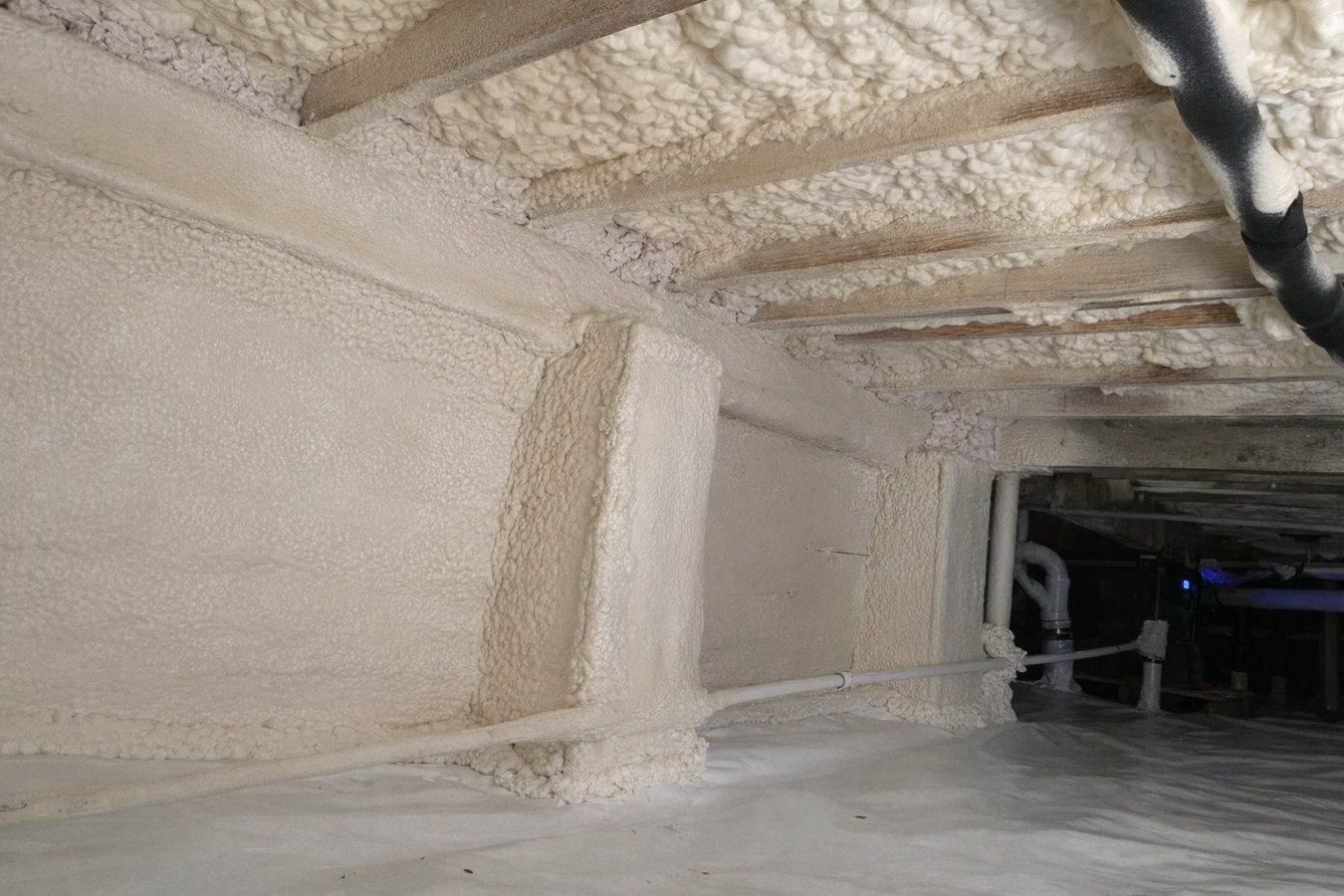
We install fiberglass batt insulation between floor joists for vented crawl spaces, and spray foam on the crawl space walls for sealed or conditioned spaces - the right approach depends on how your space is built and we assess that before recommending anything. Every installation includes a heavy-duty polyethylene vapor barrier laid over the soil to block ground moisture from working upward. For spaces where old insulation has already failed, we remove the old material first so new installation has a clean surface to work with. We also add air sealing around the crawl space perimeter, which is especially important in Twin Falls where wind off the Snake River Plain creates pressure differences that pull cold air through any gap. If you need a crawl space vapor barrier as a standalone service, we handle that separately as well.
For homeowners looking at their home as a whole system, crawl space insulation pairs naturally with wall insulation to close off the thermal envelope from below and from the sides at the same time. We can scope both during the same estimate visit so you have a clear picture of the full project cost before committing to anything.
Best for vented crawl spaces with adequate access and no active moisture problems - standard fiberglass batts fit between joists for fast, effective coverage.
Ideal for sealed or conditioned crawl spaces where air sealing the perimeter walls delivers better long-term performance than insulating the floor above.
The complete solution for Twin Falls homes where ground moisture and cold air are both active problems - vapor barrier plus insulation handles both in one project.
Twin Falls sits at roughly 3,700 feet on the Snake River Plain and sees winter lows that regularly drop into the single digits. That kind of cold pushes hard through an uninsulated crawl space floor - rooms above feel drafty even with the heat running, and heating systems work overtime to compensate. The homes most affected are the ranch-style builds from the 1950s through 1980s in neighborhoods near downtown and along the Blue Lakes corridor, where original crawl space insulation was minimal and has long since degraded. Twin Falls also sits in the middle of the most intensively irrigated agricultural region in Idaho, which raises soil moisture levels every spring and pushes that moisture upward through any unprotected crawl space floor.
Homeowners in Buhl and Gooding face the same combination of cold winters and irrigation-driven soil moisture. The Magic Valley's wind also plays a role - Twin Falls is notably exposed, and that wind creates pressure differences that pull cold air into crawl spaces through vents and gaps. A job that addresses only insulation and skips air sealing delivers noticeably less improvement than one that handles both.
We ask about your home's size, whether you have had moisture or pest issues, and whether the crawl space is vented or sealed. We respond within 1 business day and schedule a free on-site visit - no commitment required.
We access your crawl space and inspect the existing insulation, check for moisture and vapor barrier condition, and measure the space. You receive a written quote before anything is scheduled - we explain what we found and why we are recommending what we are.
The crew removes any old failing material first, then installs the vapor barrier over the soil and new insulation in place. Most jobs take four to eight hours depending on the crawl space size and scope.
Before we leave, we walk you through the finished work with a flashlight - you can see the vapor barrier, the insulation coverage, and any air sealing done around the perimeter. All debris is hauled away.
We respond within 1 business day - no obligation. Someone from our team will call to schedule a free on-site estimate. We assess your crawl space, explain what we find, and give you a written quote before any work begins.
(208) 544-9799In Twin Falls, skipping the vapor barrier means the insulation above will absorb ground moisture and fail faster - especially during spring irrigation season. We treat the vapor barrier as a required part of every crawl space job, not an add-on.
We work on crawl spaces from Twin Falls to Buhl, Gooding, Jerome, and every community in between. That regional experience means we understand the soil moisture patterns, housing stock, and local permit requirements specific to this part of Idaho.
We do not price crawl space work over the phone. Every quote is based on an in-person assessment of your specific space - square footage, access, condition, and moisture situation all affect the number. You know the full cost before we schedule the job.
Qualifying crawl space insulation projects may be eligible for rebates through Idaho Power or Intermountain Gas. We are familiar with both programs and can help you understand what documentation is needed. For details, see the Idaho Power rebate program at idahopower.com.
We walk you through the finished crawl space before we pack up so you can confirm the work with your own eyes. That transparency is what earns repeat calls and referrals across the Magic Valley.
The U.S. Department of Energy crawl space insulation guide explains the difference between vented and sealed crawl spaces and how each affects your insulation strategy. For rebate eligibility, check Idaho Power rebates for qualifying insulation upgrades.
Complete your home's thermal envelope by insulating exterior walls alongside the crawl space below.
Learn moreA heavy-duty vapor barrier paired with insulation is the complete solution for stopping ground moisture in Magic Valley crawl spaces.
Learn moreGet a free crawl space estimate from Twin Falls Insulation today - contractor schedules fill up before the cold sets in, and warmer floors are just one job away.